
Department of Archeology
Archaeology (Islamic period)
Archaeology, Tarbiat Modares University, Tehran, Iran
Archaeology (Islamic period)
Archaeology, Tarbiat Modares University, Tehran, Iran
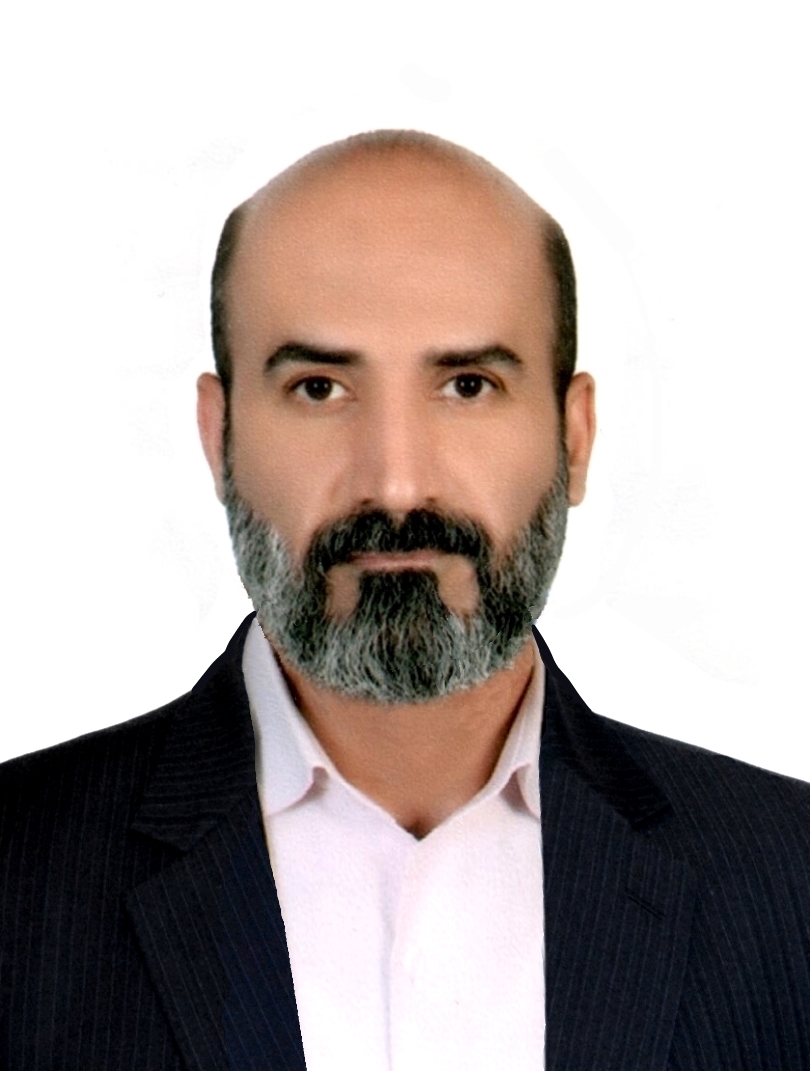
Saeed Amirhajloo was born in Isfahan on 27 December, 1983. He completed his M.A. in archaeology in 2008 at Tarbiat Modares University (TMU). He received his Ph.D. from TMU in 2012. Since then, he started his academic life as a faculty member at the Department of Archaeology, University of Jiroft. He was the head of the archaeology department and the chairman of the humanities faculty at the University of Jiroft from 2012 to 2019. After that, he continued his academic activities as a faculty member at Tarbiat Modares University. Now, He is an Assistant Professor in the Department of Archaeology at Tarbiat Modares University, Iran. He is also the head of the department of archaeology in the Tarbiat Modares University. His main areas of research include Islamic cities, landscape archaeology, Islamic ceramics, and Islamic tiles. He serves as the deputy-chairman of the Society of Iranian Archaeology. He has done archaeological excavations and surveys at the old city of Sirjan, the old City of Narmashir, the Islamic city of Kelar, the Cham-e Shir basin in Gachsaran, and the Borkhar plain in the north of Isfahan. He has also cooperated in the archaeological excavation at Barkh-o-Baran Sofla in Sarpol-e Zahab, the excavation at the Mehrnegar site in Damghan, and the archaeological survey at Malayer. He has published more than 30 articles in scientific journals. He has also presented 15 articles at conferences and congresses.
1. Introduction Soleyman Castle is mentioned in written sources of the Islamic era and is very important in the modern culture of the people of Halilrud. due to this importance, false stories and information about this castle have been formed among the people of the region. Therefore, research on Soleyman Castle and its function will lead to a revision of the views that have already been presented without scientific evidence and reasons. In this article, an attempt has been made to discuss a historical monument, while analyzing this important work, to examine a corner of the dark corners of the region's history. This article, which is a monograph on Suleyman Castle, consists of two general sections; In the first part, this important castle
Lusterware ceramics and tiles were essentially produced in some focal centers of the ancient world such as Egypt, Mesopotamia, and Iran. In Iran, there only exist evidences of their widespread production mostly in Kashan and Ray. However, limited production of this ware in Gorgan, Takht-e-Soleiman and Jiroft were also reported. Forty-four pieces of luster tiles from Qal'eh Dokhtar disposal project in Kerman were discovered and considered in this study. The goal of the research focuses on the chemical characterization and structural features of this unique ware from Qal'eh Dokhtar. Moreover, it is of further interest to know about their possible center of production as well as about the know-how on polychromic constituents. Based on the char
The importance of old Sirjan lies in its geographical location in the Persian Gulf hinterland. It stood at the intersection of routes that connected the Persian Gulf and the Central Iranian plateau. The first season of excavations at Qal’eh Sang in 2015 brought to light a complete and great bathhouse dating to the time between eleventh to fifteenth century AD and a stonecutting workshop dating to the fourteenth century. Various types of pottery were identified, most of them date to the time between the eleventh to fifteenth century and find parallels at many sites in China, Afghanistan, at the coasts of the Persian Gulf, Central Iranian plateau as well as northeast and west Iran. Furthermore, Sirjan city was relocated three t
Sirjan was one of five districts in Kerman province during the Islamic periods. According to archaeological research and historical sources, the city of Sirjan was located at Qal?eh Sang at the time from the 12th to 15th century AD. During the first season of archaeological excavation besides the identification of architectural remains, a big variety of Islamic ceramics was found which suits for further specialized studies. Questions are concerning the variation of ceramic decorations, the dating of the objects as well as the characteristics of local production at Qal?eh Sang. To answer these questions a descriptive-analytical approach is applied. The goal of these analyses is to give answers about the relative chronology, the role of Qal?e
Problem Statement: The historic cities in Iran have gone through many ups and downs, and development and decline, due to various internal and external factors. The study of these factors can help find the roots of cultural and social upheavals. The Old City of Narmashir in the southeast of Kerman is one of these Iranian historic cities. According to archaeological and historical documents, Narmashir has expanded from the Sāsānid Empire (AD 224–651) to the late Timurid period. However, as the archaeological materials suggest, the population of the city significantly decreased from the Safavid dynasty onwards. Also, The Old City was abandoned after the Afghans attack. Our question is “what environmental and ecological factors influenced
In the early Islamic sources, Narmashir has introduced as one of the five main cities of Kerman and a part of the southeast economic exchange network. But it is unknown because archaeologists have often focused on the Bam and Jiroft. The questions are: what are the types of Islamic ceramics in the Narmashir, and what periods are they related to? How does the ups and downs of life in the Narmashir and its transnational cultural relations? What are the features of local ceramic production in the Narmashir plain? The purposes of the research are:“the study of Islamic ceramic and production evidence in the Narmashir”,“typology and relative chronology of ceramics”, and “explaining the periods of the prosperity of Narmashir”. The data
Narmashir plain at Kerman, has many settlements from Neolithic to Qajar era, But it has not considered by researchers. The pseudo-prehistoric ware is one of the pottery types of Islamic period that is identified in the archaeological surveys in Narmashir. This type, has also reported from South and South-West Iran in previous years, and it has identified recently in other regions of Iran. The Pseudo-Prehistoric wares don’t have the glaze, but they are painted with brown, ochre, red or orange geometric patterns. These types of wares are like prehistoric ones, but their clay, color, and motifs are different from prehistoric painted wares. Furthermore, they distribute along with glazed wares from Islamic sites in the most parts of Iran, and
problem statement: The development and decline of historic cities of Iran are influenced by various internal and external factors, that the study of these factors clarifies the causes and origins of cultural and social changes. one of these historical cities is the old city of Narmashir in the east of Kerman. The old city of Narmashir has expanded from the Sasanid to the late Timurid period, based on the archaeological documents. The archaeological materials suggest that the population of the city has been fallen from the Safavid period, and it has abandoned after the Afghans attack. purpose: The purpose is to explain the role of ecological factors in the formation, expansion and destruction of the city. research method: Data has been col
Zeh-Kalout is located at western Jazmouriyan in Roudbar, Kerman Province. Due to several reasons such as suitable environmental condition appropriate climate, and rich water supplies this area has been a favorable location for human settlement from pre-historic times through contemporary period. Recorded items from Zeh-Kalout depict its strategic commercial and economic significance in various periods. The potteries are one of the most important cultural materials that have been found in the following research. Comparing this pottery with similar items reveals the relationships between this area and the surrounding Cultures including Boushehr, Fars, Sistan, and the eastern satrapies of Pakistan, Afghanistan, Persian Gulf, and Oman. The Pres
با سلام، به اطلاع کلیه پژوهشگران عزیز می رساند، از این پس علاوه بر سامانه و فقط در صورت ضرورت می توانید از طریق تلگرام به شماره 09904142687 نیز با کارشناس نشریه خانم سهراب زاده ارتباط برقرار نمایید.
The town planning activities of Shah Abbas I are at the top of civil activities in the late Islamic era in Iran. The construction of Isfahan-Farh A’bad Saari is one of these activities. The midway royal residences are among the important buildings in this road. The king (Shah A’bbas I) ordered to construct these royal residences and he and other kings of this reign stayed in these royal residences when they were on trip to northern regions. By studying and locating these royal residences, this question is raised that why some of these buildings developed whereas the other ones were abandoned and destroyed in late Safavid period.
The presence of landholders class during the Qajar period had created a profitable ground as well as provided higher social status for them. This was the reason why this period witnessed enormous growth of landholders. Gaining power by this social class and some of the khans, the system of" Khankhani" or" Shahpedari" 1 became authoritative hence; big land owners, other than constructing forts on their agricultural fields, employed and accommodated a large number of cultivators in their forts in order to increase agricultural production and utilization. The Borkhar plain of Isfahan, by enjoying wide chunk of arable land around Isfahan and the periphery of central desert, played an important role in agricultural and farming activities in the
A large amount of lusterwares and luster tiles has been found in the archaeological excavation and surveys during the last century. The lusterwares and luster tiles were among the luxurious and important objects in the Islamic lands, especially in the Islamic middle ages. The production of these cultural materials was only confined to a handful of individuals and a few centers. Although Kashan, Ray, Gorgan, Saveh, Sultanabad, Jiroft and Takht-e-Soleiman are labeled as the production centers of Lustreware and luster tiles in Iran, there only exists evidence of production in Kashan, Gorgan, Takht-e-Soleiman and Jiroft. Various pieces of luster tiles have also been found in southeastern Iran, including in Kerman. But the identification of thei
no record found